
We understand the feeling of loss associated with no longer being able to fish or…
A day to remember – sharing new opportunities with MP’s
Wednesday 26 November saw Opposition party members Arena Williams and Rachel Brooking (Labour), alongside Lan Pham, and Scott Willis (Greens), making the journey to Ōtata, accompanied by Katina Conomos (Revive our Gulf) and Dr. Tim Haggitt (University of Auckland). Following a rough night of 40kt winds, the day dawned with dropping wind and swell, allowing comfortable passage from Okahu Bay to Ōtata. The journey over was punctuated with discussion around the distinct absence of seabirds and the importance of protection given that Tikapa Moana/Hauraki Gulf Marine Park is a global hotspot for seabirds. Another discussion point was the water temperature, which on the day was 21 °C– in late November – something that is equal parts intriguing and worrying in terms of the summer ahead!!!
Sue Neureuter greeted us all on the main beach with her usual beaming smile and infectious storytelling of the day before. In part, this consisted of her dynamic observations of flora and fauna, punctuated by being accosted by four wētāpunga in the long drop.
Arena has visited before and it was wonderful to have her back but for Rachel, Scott, and Lan this was their first time to the Noises. It is always amazing to witness anyone’s first steps on Ōtata. Because the islands are in such a natural state, visitors or manuhiri cannot help sense this in every way possible. From the stoney sloping main beach that makes you realise you’ve worn shoes and walked on pavements for far too long, to vegetation constantly brushing your legs and claiming your attention. You are surrounded by a riot of colour and layered, thriving, ecology that only being pest free can create. On this visit, squabbling tui, dancing piwakawaka, vibrant Pohutukawa, and flax blossom were the star performers.
Discussions flowed freely throughout the day crossing both ecological and social domains and it was a privilege to be amongst Politicians that place the environment first. They were keen to hear about the process of getting the HPA across the line. That compelled us to reflect on not only the journey, but also on what is needed to achieve rapid environmental gains to help ensure a prosperous future for Tikapa Moana and Aotearoa! In many ways, the work has just begun as we continue to race against rising sea temperatures, kina overgrazing, and marine habitat loss.
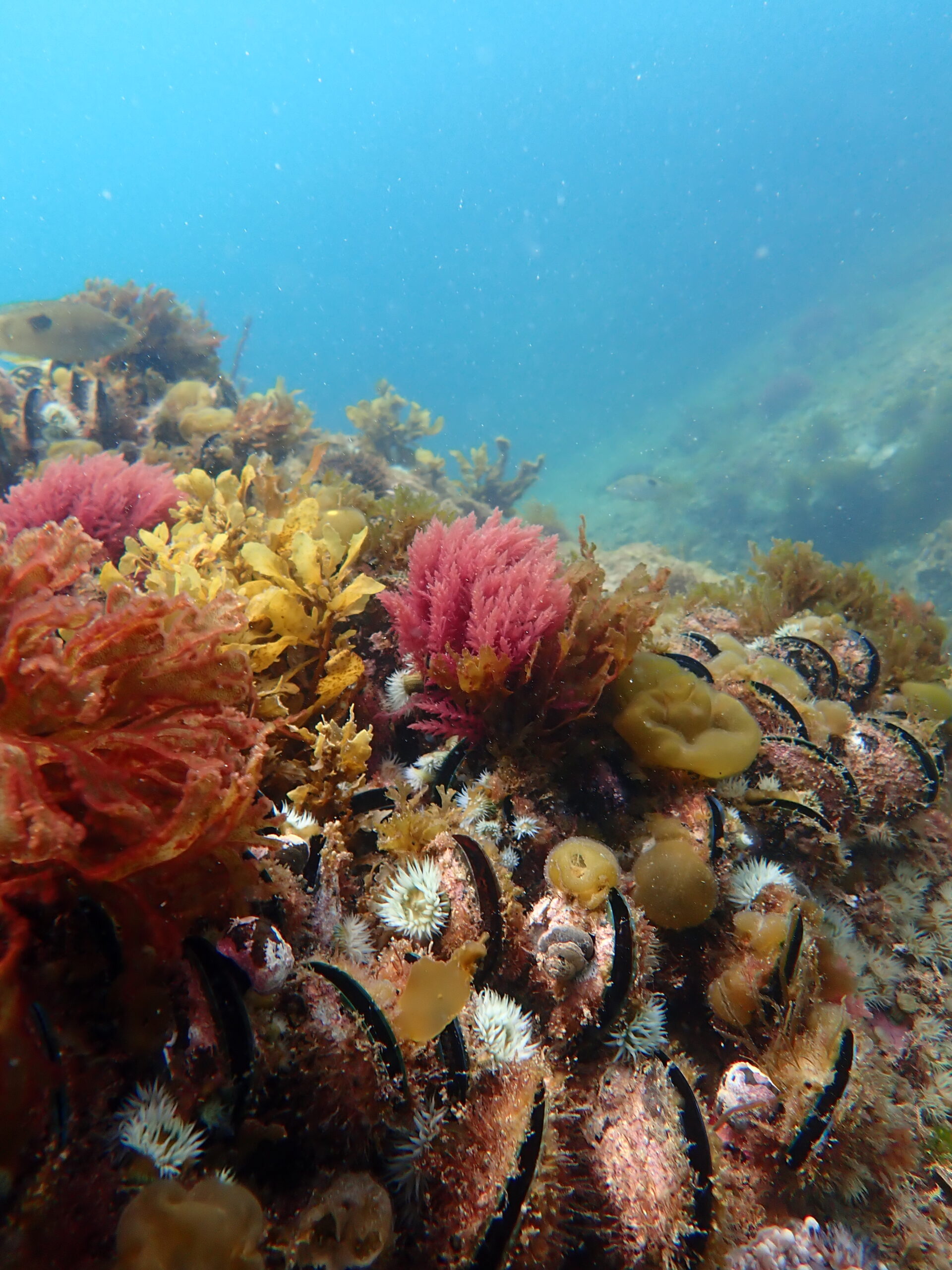
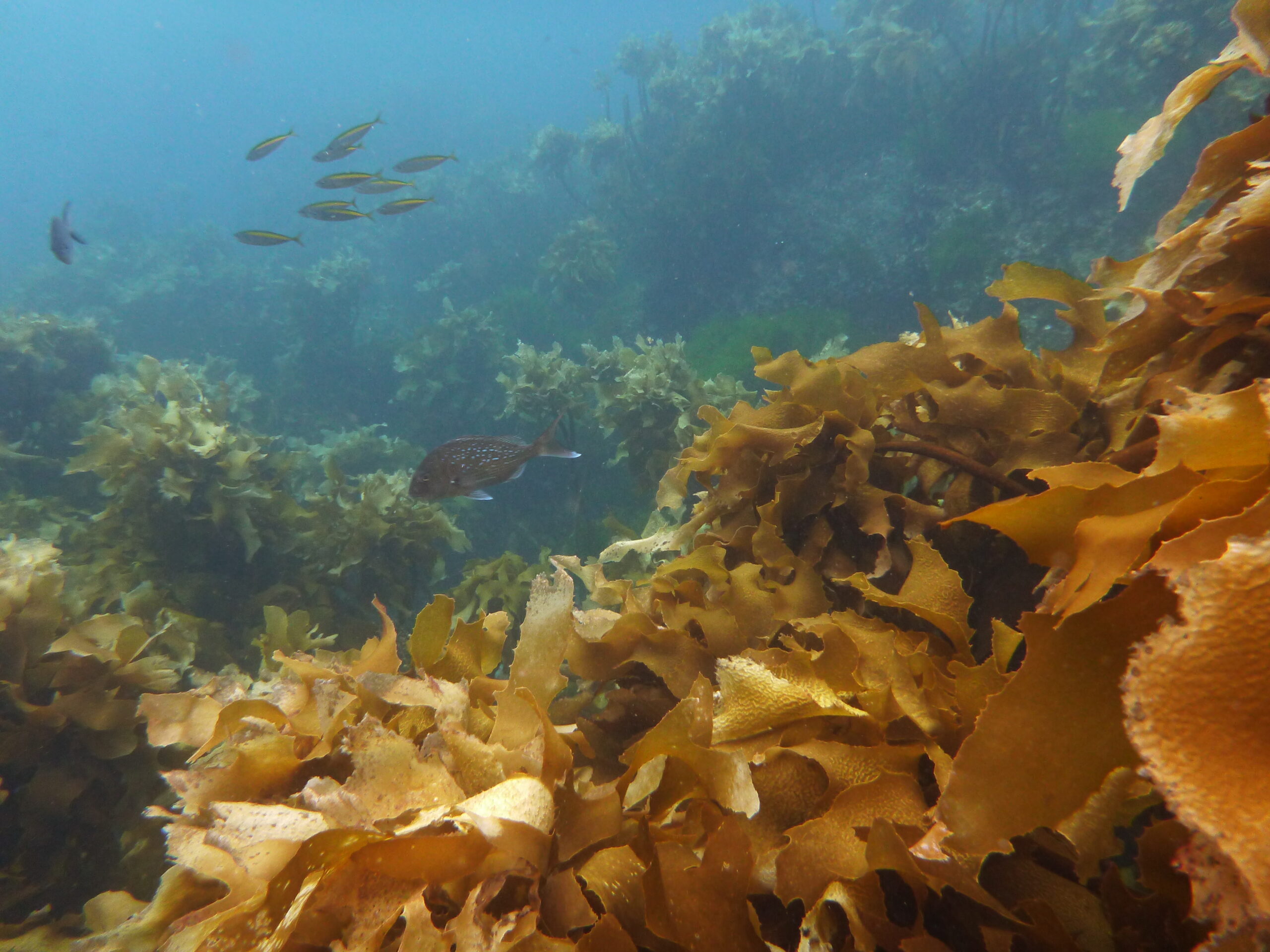
Following our across Ōtata walk and talk, we all hit the moana for a snorkel along the western side of the motu to cool down. Along this stretch, where kina numbers have been reduced, macroalgae abounds with both annuals and perennial seaweeds. Forming unique mosaics, guilds of algae carpet the subtidal rocks in shades of olive green, brown, gold, red and everything in-between. There were swaths of Dictyota kunthii and Asparagopsis armata, pockets of Colpomenia sinuosa and Ecklonia radiata, and thick blankets of Cystophora retroflexa, that offer a glimpse into what the Noises could look like in years to come. One also can’t help reflecting on the synergies between the land and the ocean at this time of year, with spring flushes of annual seaweeds complimenting new growth and flowering in the native terrestrial vegetation.
Contrasting this, were patches of kina actively grazing macroalgae and the corresponding bare rock that is left behind, with the distinct sound of kina grazing being the audio backdrop. Nevertheless, assuming kina numbers will reduce over time, and via the mechanisms of active restoration afforded by the HPAs, we hope to build resilience and reverse the pattern of loss and decline. Then, it was on to explore the mussel bed at the southern corner of Ōtata. It was teeming with life, with evidence of new spring mussel recruitment as excitedly pointed out by Sue. We are looking forward to beginning mapping mussel habitat extent this summer.
One aspect of being on Ōtata is that a sense of time seems to evaporate and following an awesome lunch (thanks Katina) it was time to depart. Discussions on the way home focused on how we can all work together and keep pushing for environmental, cultural, social, and non-extractive economic wins. Thanks to all involved in putting this trip together and for everyone’s positivity, time and thoughtful discussion.


Related Posts